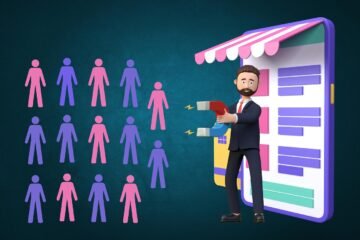

How to Use AI Tools for Campaign Personalization in 2025
In today’s hyper-competitive digital space, customers don’t just expect personalization—they demand it. Thanks to the rise of artificial intelligence, businesses can now deliver highly personalized marketing campaigns that feel tailor-made for each user.
But how do you actually use AI tools to personalize campaigns effectively? In this blog, we’ll break down the process, tools, benefits, and tips to help you get started.
🤖 What Is Campaign Personalization?
Campaign personalization involves tailoring content, messaging, timing, and offers to individual customer preferences and behavior. AI takes this a step further by analyzing data, predicting future actions, and automating real-time responses.
🧠 Why Use AI for Campaign Personalization?
Traditional personalization relies on basic segmentation—AI goes beyond this by using machine learning to:
-
Understand intent and behavior patterns
-
Deliver predictive product recommendations
-
Optimize content across channels (email, web, ads, SMS)
-
Improve customer journeys with dynamic content
🔧 Top AI Tools for Campaign Personalization
Here are some of the most effective AI tools for personalizing marketing campaigns in 2025:
1. ChatGPT (OpenAI)
-
Use for content personalization in emails, landing pages, and chat interactions.
-
Generate dynamic responses based on user queries.
2. HubSpot AI
-
Smart email personalization and lead scoring.
-
Behavior-based automation and segmentation.
3. Salesforce Einstein
-
Predictive insights and content recommendations.
-
Automates next-best actions across marketing touchpoints.
4. Adobe Sensei
-
Personalizes user experiences on websites and mobile apps.
-
Powers real-time targeting and A/B testing.
5. Dynamic Yield
-
AI-powered web personalization and product recommendations.
-
Creates real-time user segments based on behavior.
📈 How to Implement AI in Campaign Personalization
✅ 1. Collect the Right Data
-
Start with first-party data (email, purchase history, browsing behavior).
-
Integrate your CRM, website, and social analytics tools.
✅ 2. Choose the Right AI Tool
-
Pick a tool that integrates well with your marketing stack.
-
Consider ease of use, cost, and supported platforms.
✅ 3. Create Dynamic Content Variants
-
Use AI to generate multiple content versions for different audiences.
-
A/B test AI-generated headlines, CTAs, and visuals.
✅ 4. Automate User Segmentation
-
Let AI group users by predicted behavior, not just demographics.
-
Use behavioral triggers like “abandoned cart” or “repeat visits.”
✅ 5. Deliver Across Channels
-
Use AI to synchronize personalization in emails, ads, push notifications, and chatbots.
⚙️ Real-World Use Case: E-commerce Brand Example
An online fashion retailer uses AI to:
-
Recommend products based on browsing history.
-
Send cart reminder emails with dynamically generated discounts.
-
Offer real-time chat assistance using AI bots trained on user data.
The result? 25% higher conversion rates and 40% boost in customer engagement.
🚀 Benefits of AI in Campaign Personalization
-
Increased ROI from higher engagement
-
Reduced churn through better customer experiences
-
Improved relevance in messaging and offers
-
Real-time responsiveness to user behavior
🧩 Common Challenges (And How to Overcome Them)
| Challenge | Solution |
|---|---|
| Data privacy & compliance | Use GDPR-compliant AI platforms and be transparent with users |
| Data silos | Integrate all data sources using CDPs or APIs |
| Overpersonalization | Balance automation with human touch and brand voice |
✅ Conclusion: Start Small, Scale Smart
You don’t need to overhaul your entire system to begin personalizing with AI. Start by testing AI-generated subject lines or personalized product recommendations, then scale as you learn what works.
In 2025, AI is not a nice-to-have—it’s a competitive necessity. Leverage the power of AI tools to create campaigns that speak directly to your audience and drive real results.